



About
As upstream-focused agri-tech, IDM drives innovations to tackle core productivity problems in agriculture and bring real impacts for all stakeholders.
At IDM, we unlock nature’s full potential through innovation, bridging the gap between cutting-edge research and practical application. Our science with high confidence adoption of agro-ecology principles and practices will be highly beneficial to maintaining healthy productive food systems under climate change.
Dedicated teams nurture Good Agriculture Practice (GAP) and offer agri-consultation via digital platforms for efficient project management and land monitoring. Additionally, we ensure maximum business benefits by channeling high-volume demands to reliable supply networks through a fair and transparent approach.

Our concept Toward the transformation of food systems
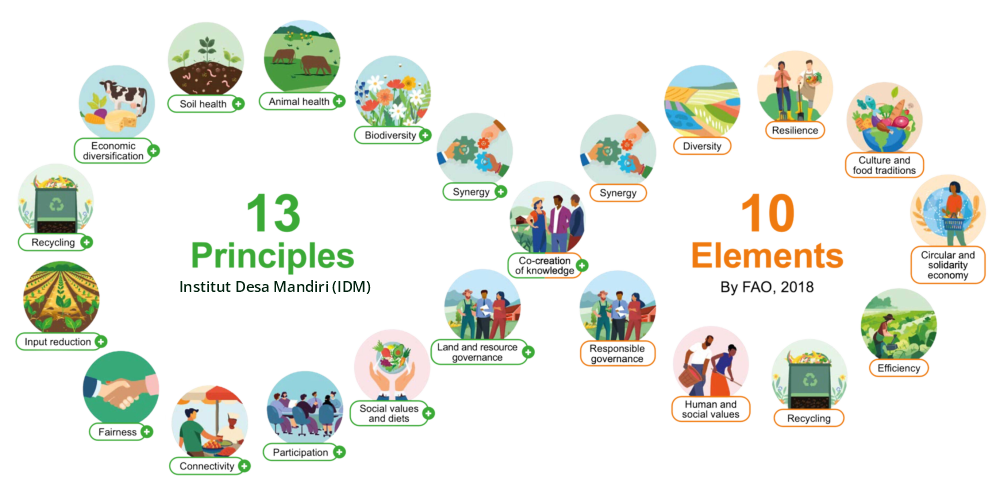
Our Commitment Toward Sustainability
Commited to Achieving
Sustainable Agriculture by 2030 through Reliable and Relevant Solutions for Farmers.
- Carbon farms and regenerative agriculture
- Promotes Sustainable Crop (Rice/Corn/Sorghum) Cultivation with CO2 Emission Reduction Report
- Digital transformation of agriculture
- Social economic analysis on climate-smart food production
- Novel ICT technologies for field and post-harvest management
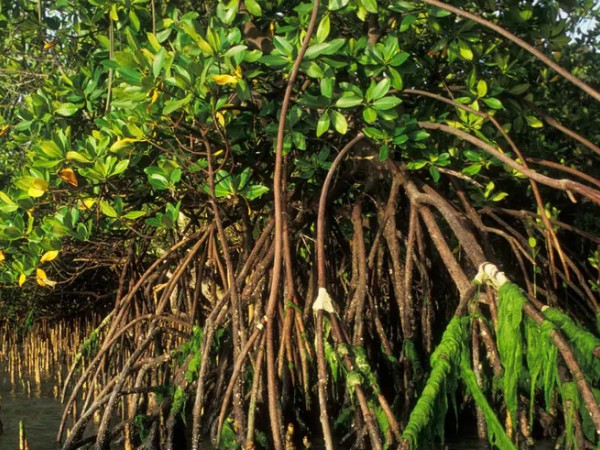
Climate Resilience
Strive for minimizing environmental impact and actively protect the health of our planet.
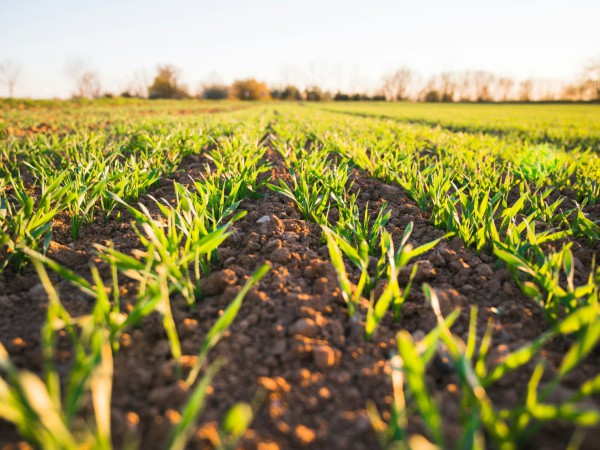
Regenerative Agriculture
Preserve our natural resources and extend sustainable agriculture to create a resilient la.

Circularity
Create a competitive difference through implementation of green practices.

Community
Create a competitive difference through implementation of green practices.


EAST JAVA : STORY BY TKS-234
Food Resilience through
Agro-ecology
Lead organisation and partners
- Ecology Laboratory Research and Development (Biology ITS)
- PT Corresco Indonesia
- PT Cindo Satria Agro
- PT Ponorogo Agro Mandiri
- Minister of Education and Research (DIKTI-Indonesia)
- Minister of Agriculture of Indonesia (DEPTAN-Indonesia)
- Center Study for Policy and Business (PKKBI-ITS)
Location: Ponorogo Regency , East Java Province in Indonesia
Context: Ponorogo Regency is on the eastern side of Indonesia. It includes a diversity of geographical and climatic zones from the plains
at 92 metres elevation, to the highest point at 2563 metres above sea level. The project is being implemented in 3 out of 5 villages in the Regency
Project duration: September 2021 to August 2024 (3 years).
Budget and Donors:
- IDR 400 million funded via the Minister of Education (Kedaireka)
- IDR 400 million Private Sectors-PT Corresco
- IDR 200 million Public Policy and Business Studies, ITS
Objective
- Build ecologically resilient communities connected by resilient food systems across the Ponorogo bioregion.
- Develop the highest quality biological resources, appropriate growing systems,
- educational materials and women-led micro-enterprise models appropriate for farming communities in the Ponorogo bioregion.
- Strengthen farmer-led research to support early-stage innovations through
- research design, experimentation, relevant capacity-building, and collaboration with other researchers.
- Scale-up innovation by recognising innovations and inventors. Put innovations into practice by collaborating with farmers’ organisations, researchers, extension services, policymakers and investors or donors.
Activities
- Research project on agroe-cological systems focusing on soil health, nutrient cycles, crop rotation and crop diversification.
- Encourage municipal governments to allocate budgets
- Develop women-led microenterprises for value-added food production.
- Educate the general public and increase awareness of agro-ecology
- Demonstrate growing systems.
- Setting up 8 experimental plots with the aim of demonstrating the effectiveness of agroecological practices,
- Develop a network of strategic partners
- Set up off-grid biofertiliser factories

A complex Monitoring, Evaluation and Learning (MEL) protocol is used to collect, process and share data/information within the organisation and with strategic partnerships. The MEL protocol.